Posts

SuSE... Might as well be called SuCKE

Or ShiTTE... >-D Last month, I was looking to install an operating system besides Windows that would be compatible with my wonderful nVidia 650-something-or-other graphics card and 4K display.  (4K = 4 times the resolution of 1080p HD.  Booyah!)  Windows 8 is nice, and handles this display wonderfully, but for optimal enjoyment of Android Studio, you should really run Linux (or possibly Mac OS too).  Plus, having Linux around on a dedicated disk is never a bad idea.  Having heard from some of my friends about how they think everything Canonical (makers of the very popular Ubuntu Linux) touches is evil, I figured I'd try a different distribution.  Stacy loves Linux Mint, but I can't wrap my head around some of its strange idiosyncrasies.  Maybe it doesn't help that she gave me an old version on a thumbdrive, but it was slow, would freeze up when I wanted to get serious with it, and there are icons that look like folder icons that you can't click on...

Mixing Logic With ISP Circuitry For Programming Firmware

Image
For the LEDgoes manufacturing & assembly stage, it would be desirable to simply secure each board to a programming jig, and the jig would be able to program both chips without hassle or confusion.  This means that we will need to insert a switching mechanism somewhere in between the ISP (in-system programmer) headers and the actual programming pins on the board so only one board at a time gets programmed.  I am quite familiar with digital logic, but don't have a knack for understanding other types of circuitry, so it struck me as a possibility to use some 74-logic to route the signals sent from the ISP to one chip at a time. The 7400 series of transistor-transistor logic (TTL) gates date back to the mid-1960s, shortly after the invention of the transistor itself.  Some chips in this series provide basic Boolean operations, others are counters or shift registers, and still others are flip-flops and latches (memory).  Over the last 50 years, this series has been ...

Unboxing the Quo Computer

Image
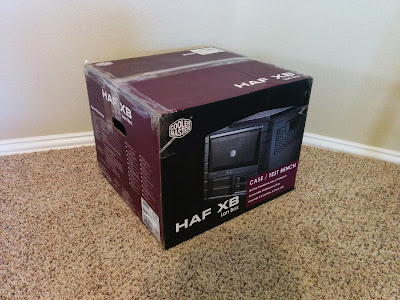
As fate would have it, I'm back to a nice pace of posts on the blog, especially since I've had a logjam of topics -- a bunch of ideas all came in at once.  This also means I get to usher my blog into 2014 on the very first Thursday of the new year, just in time for all the robots & spiders to come looking for new posts. ;) Shortly before Christmas, I finally (and unexpectedly) received a  Quo computer  in the mail shortly before Christmas, just in time to install an ESX server right before the whole family came so they could have their own VMs on our server.  (They ended up bringing all their computers anyway, and used more electricity in 6 days than Stacy & I use by ourselves in a month. :-P)  Stacy pledged for this Kickstarter project back in March 2013, and for our particular system, the delivery date was expected to be June.  It still seems like we were one of the lucky ones to have received it by now.  The "unexpectedly" part comes in w...

nmake: Installing PyQt In Windows 7 with Visual Studio .NET 2010

For those of you interested in pursuing Python development involving a front-end GUI made from Qt, and don't know how to get started on Windows 7, this is what you need to do.  This could generalize to any software you might wish to install with the "nmake" tool, which allows you to "configure", "make", and "make install" different software packages in much the same way you would on a Linux box. My setup: Windows 7 machine Windows 7.0 APIs installed (C:\Program Files (x86)\Microsoft SDKs\Windows\v7.0A) Microsoft Visual C++ 2010 Ultimate (will hopefully work with Express too) First, for our specific purpose, download and install Qt if you haven't done that already.  It'll take so long that you ought to have plenty of time to run the next step (building SIP) in parallel and still have time to play at least a couple rounds of solitaire. In general, before you build from any Makefile in Windows, download and unzip your sourc...

Livin' La Vida SSD

The other day, I upgraded my laptop's hard drive from a 500GB 7200rpm drive to a 500GB Samsung 840 EVO solid-state drive.  I purchased the SSD from Newegg.com for $290.00 (which is probably the most I've paid for a drive since 2007), and after taking about a week to get packaged by their warehouse and UPS taking their sweet time to get it over here, it finally came time for me to clone the contents of my HDD over to my SSD. The performance of my HDD had been dismal, especially as it became more full of Heaven knows what.  (This is still an issue, hence why I recently downloaded Mark Russinovich's "du" program for Windows , so I could analyze which directories contained the biggest wastes of space.)  As you'll see if you watch the video, it took over seven minutes for my computer to become responsive enough to be useful after a cold boot.  Windows itself took a real long time to spin up, then it took even longer for my desktop icons to come up so I could actu...

I'm a Loser... (of Data on Hard Drives!)

I started getting good at building computers in 9th grade, and throughout high school, I had lots of fun constantly upgrading and improving my "big rig" to have more hard drive space than anyone else in the neighborhood.  By 2005, I was well on my way to 2 terabytes of space, and I now have approximately 20 hard drives ranging from 100GB to 2TB in size, and with both SATA & PATA (IDE) interfaces.  (This doesn't count all the really old <5GB drives I used to play with while I was busting my chops.) Anyone who's taken a probability class with a focus on electrical engineering knows of a little statistic that works against me and anyone else who owns a large number of hard drives: this statistic is called " Mean Time Between Failure " (MTBF).  In short, the more hard drives you own, the more likely any one of them will fail on a given day.  Well, over the last 16 years, I've had a fair share of failures: 1997 - Laptop hard drive 2006 - Power su...

Ben Stein wasn't the first...

Those of you who have followed Win Ben Stein's Money at all may recall that time back on July 1, 1998 when a contestant finally managed to defeat Ben Stein and get a perfect 10 score on the bonus round, thus prompting Ben & Jimmy to drop their trousers .  However, you may not have heard about another instance over 20 years prior when the pants-dropping bug bit Pat Sajak on Wheel of Fortune ! While I've been meaning to post this clip for a very long time (and it appears someone did in fact beat me to the punch with a very brief 7-second clip of it), a Facebook thread prompted me to finally take action, dust off the ol' DVD collection, and spin this one up to rekindle its glory and a piece of the Internet's ever-wandering attention. The year was 1987, Black Monday was about to hit the stock market, Microsoft released Windows 2.0, and to start its fifth season in syndication, the producers of Wheel decided to lose the shopping round format and have the players s...